Adventures and Travelogue

“People will travel anywhere for good food – it’s crazy”  Rene Redzepi

If the best chef in the world thinks its crazy it may be so but lets go back. Back to our earliest ancestors. Why did they move?

They moved to find food. The hunter gatherer spirit of our earliest forebears motivated them. Maybe for survival or maybe for variety. The zest for food that is demonstrated by tribal communities is fascinating. We may have lost the contact with the earth, the hunt, the dig, the thorns from foraging but we still have a spirit to hunt out variety and quality.

We are capable of producing nutritious balanced and perfectly survivable drinks and foods that need no thought or effort but we have that deep spirit that craves the equation of:

good food = happy

The following pages encompass the drive to travel and experience different places and people through their food and drink.

Please enjoy and be inspired.

low angle photo of airplane
Photo by Sam Willis on Pexels.com


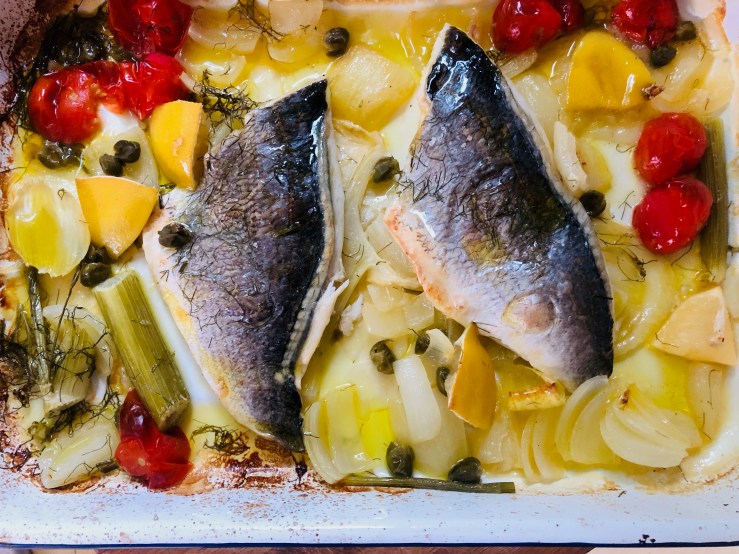
Sea bream with Fennel

On a slightly too warm evening minimal effort on the kitchen is needed. Grilling outside is fine but after a hard day is more work.

Easy as anything is this dish. Skin on filets of Sea Bream, Sea Bass or other meaty white fish are ideal. I guess any decent firm fleshed midsized fish filet will be good here. In the USA Red snapper, Drum or Redfish would be good.

Really simple.

Heavy baking tray. Oven onto about 150 degrees. Slice thinly some fennel bulb. Throw in some cherry or baby plum tomatoes. A sliced onion. some sliced potatoes (could par boil or microwave if you want to be soft). Throw on some lemon quarters and a handful of capers

Toss the lot in olive oil.  Put the fish filets on top skin side up. Scatter with Maldon or a coarse salt. One glass of white wine into the pan. one into a glass and enjoy.

Sea Bream with Fennel

Into the oven uncovered for 30 mins.

The wine will steam the fish and cook the veggies.

Serve with a side salad and good bread to mop up the juices.

(does it need saying that a bottle or 2 of good crisp white wine might work well here…!)

SeaBream with Fennel, capers and tomato

Potted Meat

The origins of potting go way back. Preserving without refrigeration was a challenge.

In cooler climates when the seasons minimised hunting and fishing reliance on stored food was paramount.

Some friuits and vegatables stored well but meat would spoil unless treated. Salting, smoking and air drying were the mainstay but with time it was seen that cooked meat could be stored without spoiling. To do this a technique of keeping the oxygen out was required and before tins and jars this relied on using fat as the seal.

With this a certain element of improvement in flavour and texture was seen and from this the great dishes of pates, terrines, rillettes and confits have derived.

A particular dish of English history is that of potted meat or fish. A shredded protein moistened with its own cooking stock and sealed under butter. Spices traditionally were heavy with spice; mace and cinnamon, pepper and garlic, cloves, ginger and cayenne.

Game is especially suited to these preparations but other meats and fish are also candidates.

The most famous dish that still is on the shelves of supermarkets is the wonderful morcambe bay potted shrimps , a delicacy spread on hot brown toast.

Potted shrimps were really only an industry from the 1920s and the principle of potting goes much further back.

For Potted salmon The Experienced English Housekeeper by Elizabeth Raffald (1786) states:

salmonrecipe2


In the updated “New experienced English Houskeeper” published in 1795, Sarah Martin writes

Salmonrecipe

the use of mace, nutmeg, chyan (Cayenne) and salt must have been impressive.

For meat things go further back.

The formulation of  pate and potted meats appears as similar as the words describing them. There are several explanations of this. Pate is etymologically similar to pasta and may refer to the smooth paste that is familar in modern pate.

Potted foods may derive from the same but in medieval times storage and transport of cooked meats was often in  pastry case as a pie. The pastry was a seal rather than a edible part. A development of the seal using fat rather than pastry occurred and a covering of goose or pork fat was used as still the case in rillettes or confit.


Rillettes: A French savoury meat preparation, used for hors-d’oeuvres and savouries

Charles Herman, Culinary Encyclopaedia 1898

The more readily available butter was also used and spices added to improve and individualise preperations.

Other flavours were added and broths and stocks added to retain moisture.

Sealed under a layer or “garment” of fat these products could be kept for weeks or months.

Here is a link to my recipe for potted woodcock.
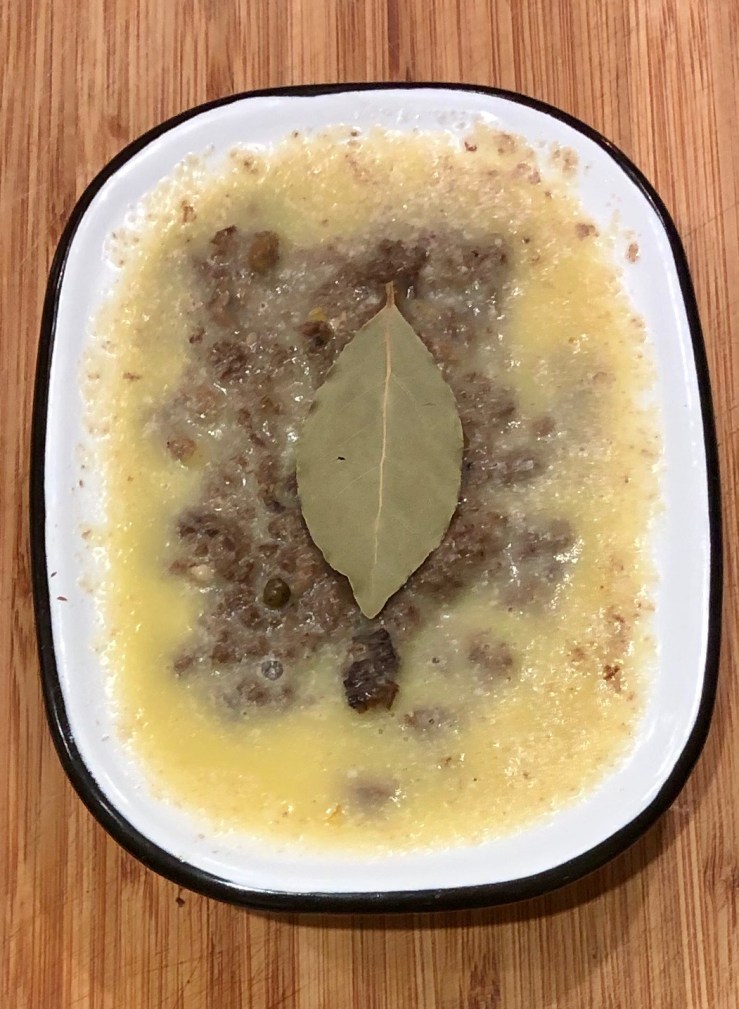
IMG_7461

Buck’s Boiled Peanuts

Most of us are aware of the ubiquitous salted peanuts or their extravagant cousins the come in the dry roated variety. Available globally in foil packs with a long shelf life they get opened for pre-dinner drinks, celebrations or just when unexpected gusets drop in.

Then there is the raw peanut in the shell (I grew up calling them monkey nuts), which for unknown reasons has become more likley to be in a bird feeder than a bowl. Perhaps the cracking of the shell, extracting the unflavoured, unsalted nuts are beyond the modern taste.

However my peanut experience reached a new high on a recent roadtrip through Alabama. The humble peanut was transformed for me.

Alabama formerly a great state of cotton now is the peanut champion of the world.

The local way to serve them is boiled. Fresh green peanuts in the shell.

Cooked more like beans with salt and water for 3 hours they take on an almost tea like flavour with tannin and subtle herbal grassy taste and just a tiny hint of sour.

Buck who is renowned for selling P-Nuts from his stand on the side of the Old Seale Highway in Pittsview, Al.

UNADJUSTEDNONRAW_thumb_63cc
Bucks P-Nuts
7dvdlmhftf5nwlxsej3mg_thumb_63c8.jpg
Buck’s P-nuts, Pittsville, AL

Buck does both traditional and cajun flavours and a scoop will cost you $3 or 2 scoops $5.

Are Bucks the best in Alabama? well plenty would say yes and he has the pages of his vistor book stapled to the wall of his little stall. Evidence that visitors have travelled from 52 countries and all 50 states just to taste his peants.

He will get you to try a few, take a few photos and let you in on his philosopical musings scrawled on boards on the wall.

IMG_9685
Buck’s Boiled p-nuts


If your passing grab a bag, split the shells and pop the soft P-nuts into your mouth. They are messy and definately not a snack to eat whilst your driving but even later when they have cooled down they are a fine accompanyment to a cold beer or a glass of wine.

IMG_9684
Boiled peanuts Alabama

If you have’t tried boiled peanuts before you must. If you have tried them, then go see Buck and see why people make the journey.


A world tour in your city

I have always wondered why people spend so much time travelling and then gushing about how good this or that was. Often the experience won’t be authentic and even if it is its probably not the best.

the most passionate people about their food and culture are ex-pats. Exhiles and migrants want something to hang on to. they want their identity and their history.

In my city (as in most) there is a vibrant and exciting melting pot of global culture. This includes food. Within a short uber ride I can “visit” all the continents and delve into mind blowing tasting experience that I doubt I could find without a world tour.

I think this concept will get expanded as the adventure continues but my mind is racing at the thought of persian biryanis, afghani kebab, south indian Dosa, punjabi curries, bangladeshi prawns. Across to sichuan exotica, handmade noodles, cantonese classics, japanese sushi, street food vendors with tacos styled from SoCal to the texmex border. Tennessee style fried chicken, Cuban sandwiches to ropa viejo.

How about markets and stores. There may be a call for brexit but the availability of Turkish and Eastern European, African and Asian ingredients is expanding.

Ask yourself  “How far can I go on a culinary journey within a few miles of my doorstep?”

You may be suprised. N

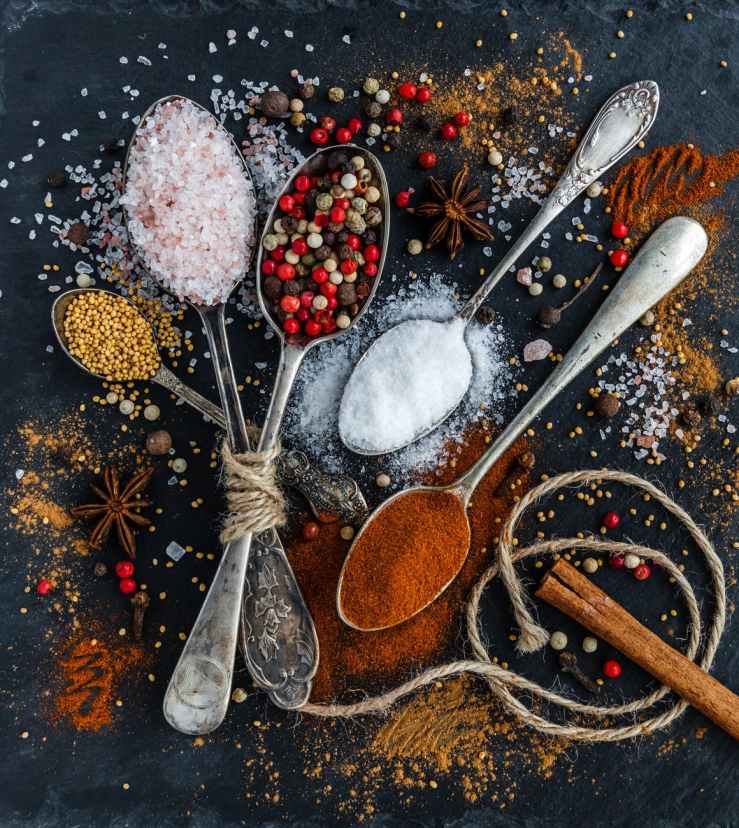
anise aroma art bazaar
Photo by Pixabay on Pexels.com

o jet lag. No queues. No passports. All foodie adventure.


Ox hearts

Searching the net there seems to be lack of good recipes. Even hitting the books. Can’t find much.

The balance of fast searing and long braise seems to be up for debate.

I’ve got no doubt in this. It’s a marble free meat. The texture is tight. It’s a very hard working muscle.

It needs a quick cook. Too much it’s gonna get tough. Cook for hours you may be lucky but there is no collagen to melt in there. It’s solid protein. Too much work and it’s gonna get cramp!

It’s generally described as bland liver – which is not good- to tasteless rubber – worse.

So we have :

1. A meat that needs quick cooking

2. A meat that needs a little help to bring out its best

For me that shouts Chinese flavours. Seared in a rich, sweet, umami sauce.

Let’s add Chinese mushroom soy sauce. Pinch of sugar. Pinch of dried red chilli.

Stir fry with a bit of garlic and ginger.

2-3 mins max.

Serve as a bowl with stir fried leaves, kimchi, chopped spring onions, some steamed noodles or rice.

I like this hot – chopped scotch bonnets but any chilli will enhance things


Sunday 27th January

Still not been shopping. Honestly! Ok. I have eaten out a few times and  I’ve been traveling for a few days.

But I’ve not restocked.

So its a month out almost.  I’ve got a few carrots and some celery that have held up.

The freezer is getting depleted. Time to empty the bottom shelf – rest of my game. Mallard, pheasant and pigeon. All breast meat. Limited stock.

Wild duck and pigeon can be liverish. Mixing 50:50 with white game (rabbit would also be good). game is low fat so add some bacon or belly pork.

A bit of sweet and sour is required to make it delicious.  Here it is marmalade and pickled onion.

Other sour options would be Red wine, balsamic vinegar, borretane onions, citrus (duck and orange), sour cherries, verjus….

The sweet could be a pinch of sugar, a spoon of honey or a splash or port/madeira…

img_7731
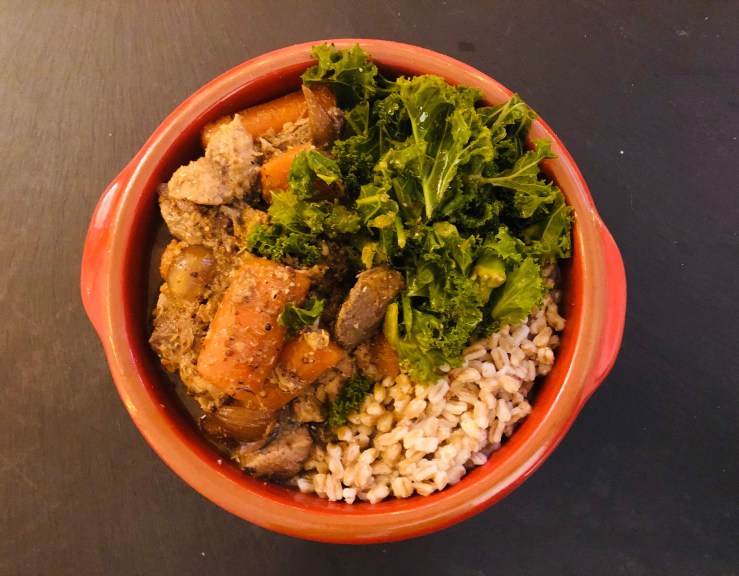
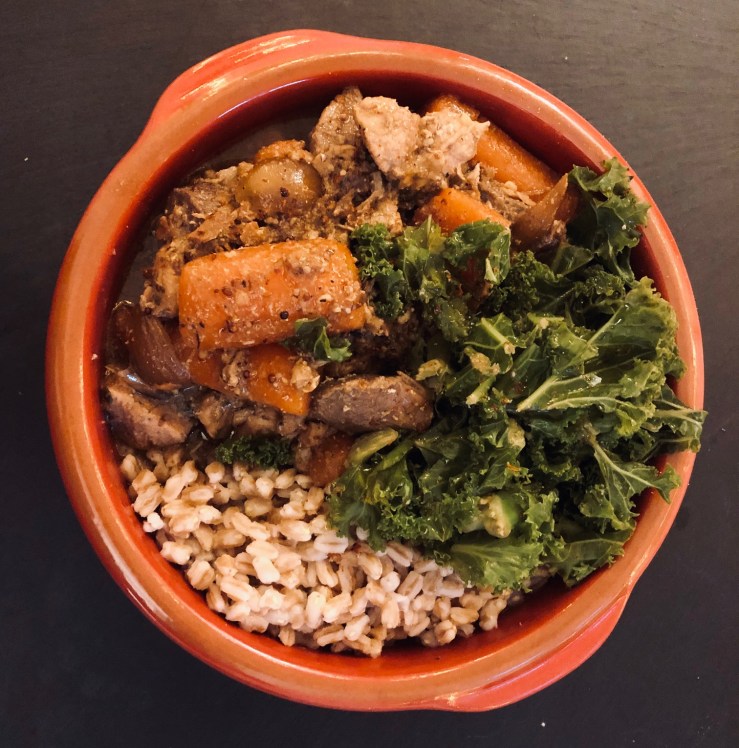
Game stew with farro and kale

Game casserole (Stew)

Ingredients

2 x pigeon breast

2x mallard  breast

2x pheasant breast

bacon lardons

4 carrots – peeled and cut big

1 stick celery – chop in 2

Pickled onions – 6-8 cut up into 1/4s

Stock ( I used up some Xmas turkey carcasse stock)

Herbs (bay leaves, thyme and woody herbs e.g. marjoram, rosemary, oregano)

To finish

Marmalade

Grain mustard

Method:

This is a slow cooker/crockpot dish.

Large dice your meats, throw in your lardons, carrots and celery, chopped onions and herbs.

Add stock ( I had roast turkey and some trotter gear).

4 hours on low should do.

ladle off the liquid and let the meats rest. Skim off the fat and then reduce in a frying pan with a spoonful of marmalade and a teaspoon of grain mustard.

Stir the whole lot together.

Serve with some steamed kale and mash potato or my favorite is boiled farro (spelt) which works really well.

(Could add cream and serve over rice as stroganoff with mushrooms but no need really.)

img_7732
Mallard, pigeon and pheasant casserole


Saturday 19th Jan – lemon sole

Never been a fan of flatfish. I like fish with a bit of body. Flatfish I always want for a mouthful rather than the picky little bits. I guess in reality Halibut is a flatfish but the filets are so big it doesnt count.

For this reason the lemon sole in the freezer has been there a couple of months. An awkward shape taking up more space than it deserved.

Looked for a few ideas online to inspire but as with most fish simple seemed the best option.

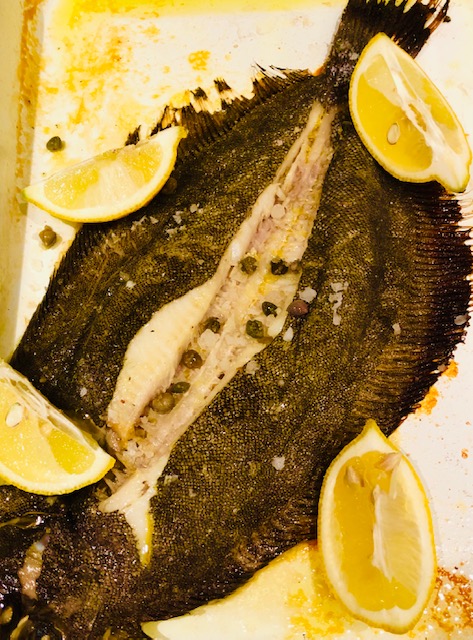
Baked lemon sole 

Ingredients

1 lemon sole – skin on, cleaned

Method

Simple. Oven at 200C. Oiled baking tray. make a cut down the spine (lateral line). Scatter some capers and their salt over the fish. In oven for 10mins. Done

img_7707

Serve with a lemon and a side of buttered or creamed spinach


Week 2

This has been an interesting experience. Two weeks and suprisingly not had to shop at all.

The freezer is still pretty full as are the cupboards. I am now on longlife milk and the only thing I have missed is yogurt and tinned beans! I wanted some cannelini beans and the cupboard is bare.

What have  learned so far?

  1. I was very well stocked up
  2. With a bit of thought two wweks is fine
  3. It’s easier to do unhealthy carb based food
  4. regularly changing newspaper in the bottom of the veg shelf of the fridge dramatically increases the life of vegetables

Week three may be a challenge…!


Tuesday 15th Jan – Pheasant

Bottom shelf of my freezer contains game meat. I finished off a fantastic loin of fallow deer before Christmas. Its all featered game now. The supermarkets stock dressed birds cheaply now and some farmers markets will have game dealers form local shoots.

Early season its partridge but after October its Pheasants and maybe a woodcock if lucky. A few ducks and an odd pigeon.

I am fortunate enough to be able to shoot my own and am always very grateful for any game. The whole concept of wild meat that has been free to roam and forage in the woods is much more appealing and interesting than the bloated adolescent poultry that is readily available in supermarkets.

When it comes to game there is a romanticised view of roasted birds served in a historic tableau with pewter jugs and bone handled carving forks. In reality many are overly hung and dissapointing tough.

After returning from a days shooting I hang birds for a short time. Partridge overnight and max 48 hours (plucking is much easier next day). Ducks next day and pheasant in early season its usually just overnight in the celler. In the midst of winter from late Nov through to end of January maybe 48 to 72 hours max. I am not sure that it achieves that much and unless you really like the stronger taste I think it is detrimental.

For pheasants unless I am feeling inspired to pluck I tend to make a nick in the breast skin and simply work it away with my fingers. the whole skin feathers and all can be turned inside out and the breasts removed. The legs likewise can be removed skin free.

If I’m not cooking it fresh I vacpac it and freeze it. Its a great meat for curries, stir fries and my favorites slow cooked winter stews and casseroles.

img_7695

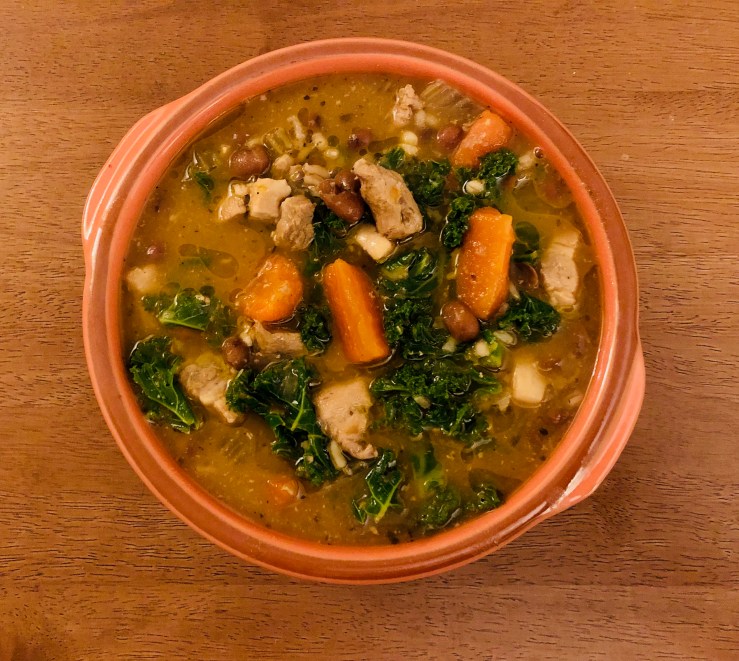
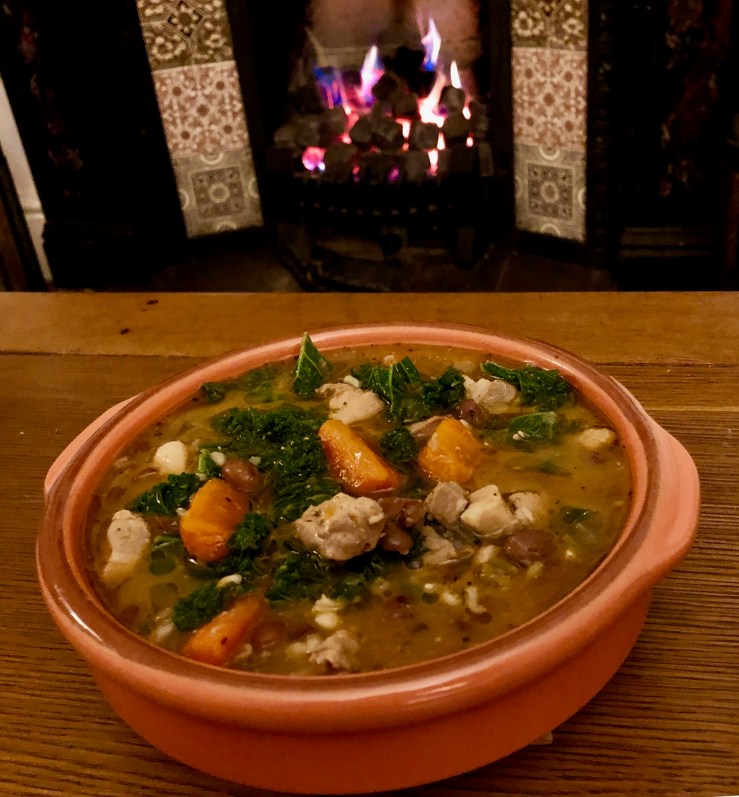
Italian Pheasant stew (serves 4)

Ingredients

2 pheasant breasts, cut into chunks

200g chopped belly pork (or bacon lardons)

1 cup chopped celery

3-4 carrots cut into large pieces

1 onion chopped finely

2 cloves garlic crushed

salt, pepper, italian herbs, bayleaf

2 pints chicken stock (stock cube)

borlotti beans (or other beans – drained tinned beans are fine)

mixed italian grains (eg farro/spelt/barley)

Kale


Method

Brown the belly pork in a casserole dish. Remove and then soften the onion, celery and carrot in the rendered fat and a splash of oil. add the garlica and herbs

Add the belly pork and the chopped pheasant and stir. Add the stock and bring to a simmer.

Cook on a very low simmer for 2 hours.

Add the beans and grains and cook for a further hour until the grains are soft.

(the grains can be cooked seperately and added at the end if required).

img_7700Serve in a bowl with some steamed kale stirred in and a drizzle of rich flavoured olive oil.