Piccalilli

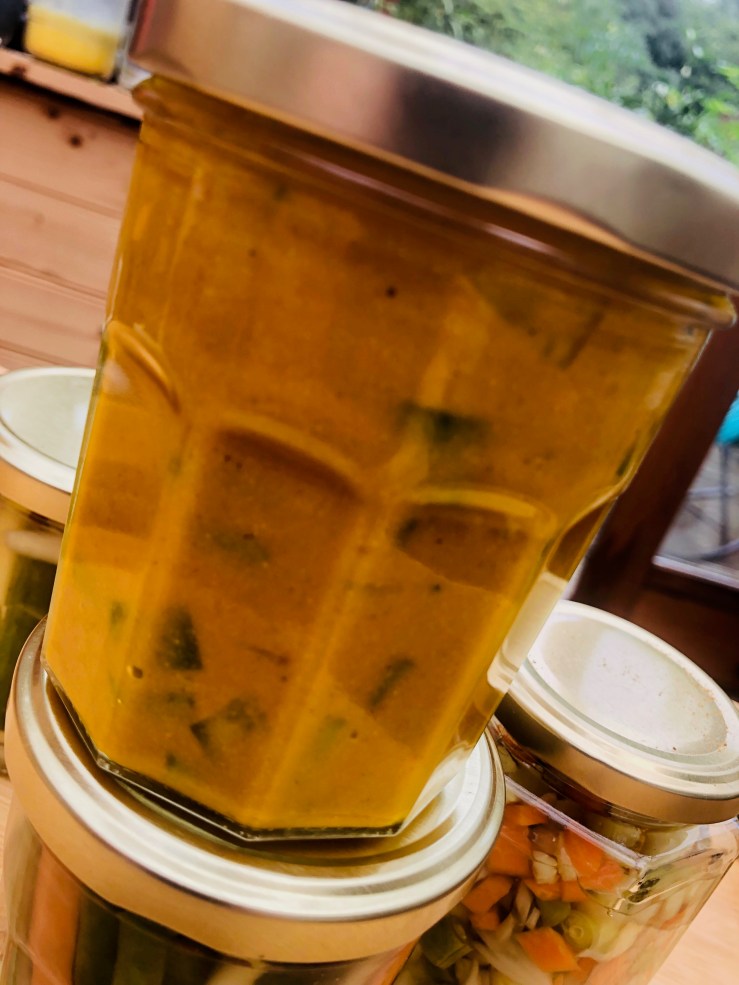
A pork pie isnt the same without a dollop of crunchy mustardy piccalilli.

Apparently adapted from south indian pickles the original recipes are from the 17th century.

A chunky vegetable mix – classically cauliflower, onion and gherkins – is covered in a thick mustard vinegar sauce and preserved.

Classicists may argue but my view is to use a variety of veg that are good and available. Chopped green beans, runner beans, courgette, onion, spring onion, celery, carrot etc Many of the indian vegetables such as tinda and dohdi also work well.

I like to add red chilli to my piccalilli. Gives it that extra bite especially with a good cheddar cheese.

Recipe:

  • Mixed chopped vegetables – see above.  aim to have as similar size – about 1 cm cubes max (enough for 3-4 jars but can increase)
  • malt vinegar (250ml)
  • cider vinegar (250ml)
  • pickling spices – mustard seed, allspice, peppercorns
  • mustard powder
  • 1 tsp of plain flour
  • turmeric
  • red chilli – fresh or dried

Salt the vegetables liberally and leave in fridge for 2-4 hours.

Heat the malt vinegar with the pickling spices to a boil. Whisk in the flour, mustard, turmeric (strain spices if you wish before this).

Allow to thicken up whilst whisking. Take off the heat and add the cider vinegar.

Wash the veg and drain so they are dry.

Stir into the mustard vinegar mix and mix so all veg thouroughly coated.

Put into sterilised jars and lid.

Store in a cool dark cupboard or pantry for 2-3 months.

Serve with cold meats, pork pies, cheese. Excellent on a sandwich with corned beef.
IMG_9731

Pickles

Preserving food by pickling is an ancient practice. In every cuisine there is some form of pickled food and in many place these provide a very unique character and a key sense of identity.

IMG_9729
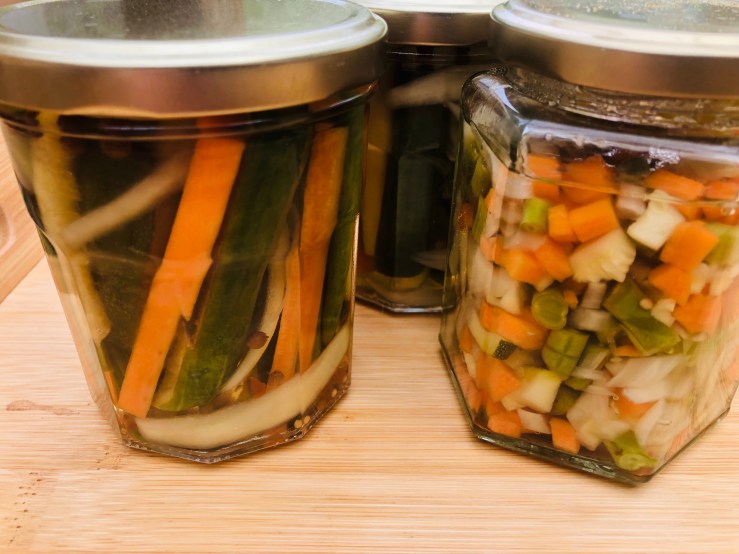
Home made mixed vegetable pickles ready to mature in a cool place.

One could wax lyrical about an English summers day with a ploughmans lunch. A pint ofbest bitter a sharp chedder cheese and a crunchy pickled onion. Add a slice of pork pie and a spoon of brilliant mustardy yellow piccalilli. Ask for that elsewhere in the world and not only will it be unavailable it will mean nothing.

This is a global phenomenon. Just thinking about pickled ginger and immediately you are in japan, dill pickles and the US burger, Pickled lemons and the North african tagine. Lime or mango pickle takes you to India. Kimchi to Korea. The Giardiniera to Chicago (or New Orleans Muffeletta), green beans to Louisiana. French Cornichons. German Sauerkraut.   

Its not just vegetables. Soused herrings in Scandanavia, Swedens famous Surstromming (the worlds smelliest food), pickled cockles in a London fish and chip shop. South Africa has Kapsie kerrievis, the Easter speciality of curried pickled fish.

Meats are also pickled. pickled pigs ears and tails are soulfood classics. Pickled sausage is popular in Eastern European and makes a great bar snack. Corned beef  or salt beef has been the making of many great sandwiches and bagels.

The traditional role of pickling to preserve foods has been extended to use pickling for texture and for flavour.

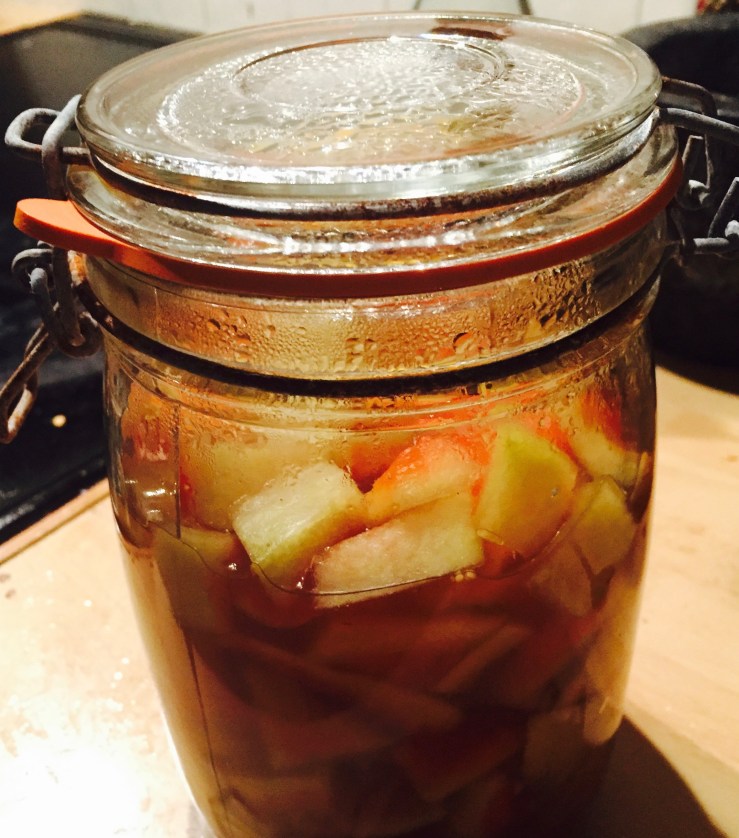
Watermelon rind pickles
Watermelon rind pickles may sound odd if youve never had them but they are fantastic. Fruity sweet and sour.


There is a world of pickles out there to try. Here are some links:

  • Japanese Pickles (Tsukemono)
  • Watermelon rind pickles
  • Pickled jalapenos
  • Piccalilli
  • Pickled mushrooms
  • Quick pink pickled onions
  • Quick sauerkraut
  • Green bean pickle
  • Pickled okra


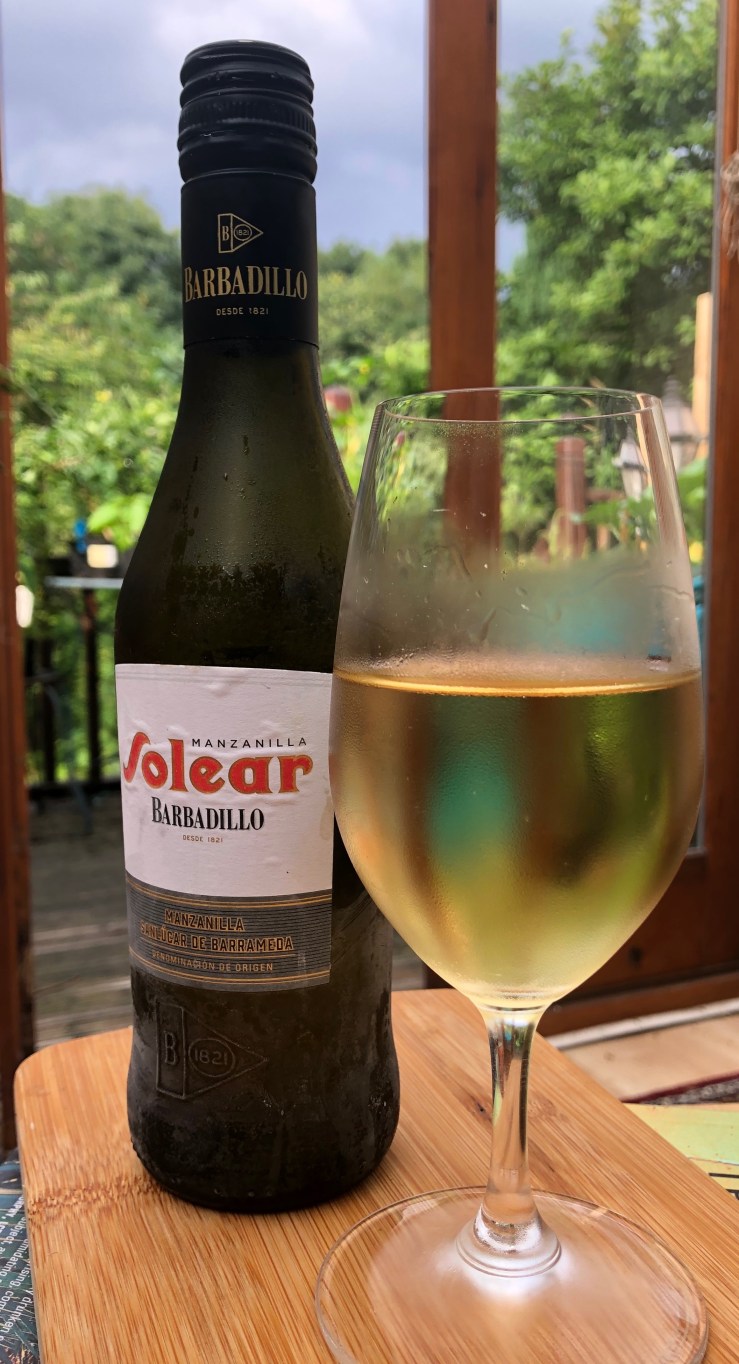
Sherry – an overlooked gem

Its difficult to understand. One of the worlds greatest and interesting wine styles. Enigmatic and individual. Often rare and made with painstaking attention to detail, only possible in a tiny part of the world. Well known but rarely talked about.

The mention of it to some produces the same response as mentioning oysters.

To others a casual “I’m not really keen on it“.

I wonder why?

Certainly the styles differ so much that if someone who doesn’t like dry wines has a fino or a manzanilla they might be put off. Likewise a PX to a desert wine phobe will not strike a chord.

Then there is fortification and oxydation. Both are a far cry from modern “clean” yet bland flavours in commercial wine manufacture.

Interestingly the cult of natural wines has caught the imagination of the hipster foodie crowd yet sherry is still labelled old fashioned.

Perhaps this is a good thing and not have a fleeting trend of sherry bars open and then close although it would be great to be able to order a copita of this fantastic wine served perfectly in more places.

if you want to know more here asre the borad Sherry styles. I will cover more in following pages:

  • Manzanilla
  • Fino
  • PaloCortado
  • Amontillado
  • Oloroso
  • Pedro Ximenez (PX)


IMG_9703.jpeg


Tequila and Mezcal

A recent experience in a bar in Antigua Guatemala restored my interest in the unknown world of these agave based spirits. [see my travelogue links here]

I am not going to profess expertise but more share my learning experiences here. I am definately not an expert but I am keen to learn more.

What do I know already ?

  1. Lots of tequila is slammed with salt and lemon
  2. Most people say they don’t like it and pull a face
  3.  A good margarita is a great cocktail
  4. there must be more to this than cheap bar slammers

So I found myself in a respite from the mid afternoon sun in a bar in Antigua Guatemala. 100 yards from the famous arch.

Nipping into the cool restaurant called Fridas, an homage to Frida Khalo and obviously mexican based, i flopped back into a leather tub chairvin the corner.

Following a few very refeshing Gallo, the local beer I read through the menu and saw a great list of tequila and Mezcal.

The difference between the two I’ve since researched is either very complicated or very simple. A fantastic read is Tom Bullocks guide “The Mezcal Experience” which is highly recommended.

The simple difference is that for mezcal the agave heart (pina) is smoked then fermented and distilled whereas for tequila the pina is pressed and must be blue agave only. This is important for the resulting product. Tequila is a refined and more pure alcohol spirit whereas mezcal is complex, smoky and more varied. [I am happy to be corrected if this is too simplified!]

The next variable is age and oak. Silver (unaged), Reposado and Anejo all add dimensions that alter the drinking experience.

What did i drink that afternoon? I went to the best on the list. Danzantes. I must confess i have had this once before at loki wines and it was a revelation. The complexities of fine bourbon, rum, armangac, with the subtle smoke of scotch whisky.

I was not disapointed. nor with the acompanying fried cricket.

This inspired me to delve deeper into these interesting spirits and in following posts I will compare some of the mezcals and tequilas that are available to me.

see:

Duck Confit

The process of creating confit is an ancient technique used to preserve meat in the days before refridgeration.

The meat is very slowly cooked bathed in its own fat. As thetempearture of the fat melts within the meat but isn’t rendered out the resulting meat is fall apart tender and full of flavour.

Confit meat should be looked upon as an ingredient and not an end point.

Duck confit can be used as a dish on its own of course, crisped up in a hot oven. Equally it can be shredded into a perigord salad with walnuts and bitter leaves or added to a cassoulet.

Duck confit usually uses the legs as the breasts (magret) are reserved for other uses.

Other bits can be confit most notably the gizzards – an extremely lean and dense meat which again is the traditional addition to a perigord salad.

Here is a simple recipe for confit de canard using duck legs. Many store bought ducks have less fat than the traditional farmyard duck that this was intended for. Even so they still produce excellent confit. you may have to get a tin or jar of extra fat though. Chinese supermarkets may breeder ducks available. Not only are these older birds inexpensive they carry thick fat and are perfect for this use.

The carcass can be slow roasted and the breasts shredded. The rendered fat can be used to complete the confit.

Recipe:

  • 2-4 duck legs
  • maldon/ kosher salt
  •  dried thyme (pinch)

Liberally cover the duck legs witha good quality crystal salt and thyme

Leave in fridge for 24 hours. Wash off and dry the legs with kitchen paper.

IMG_9672
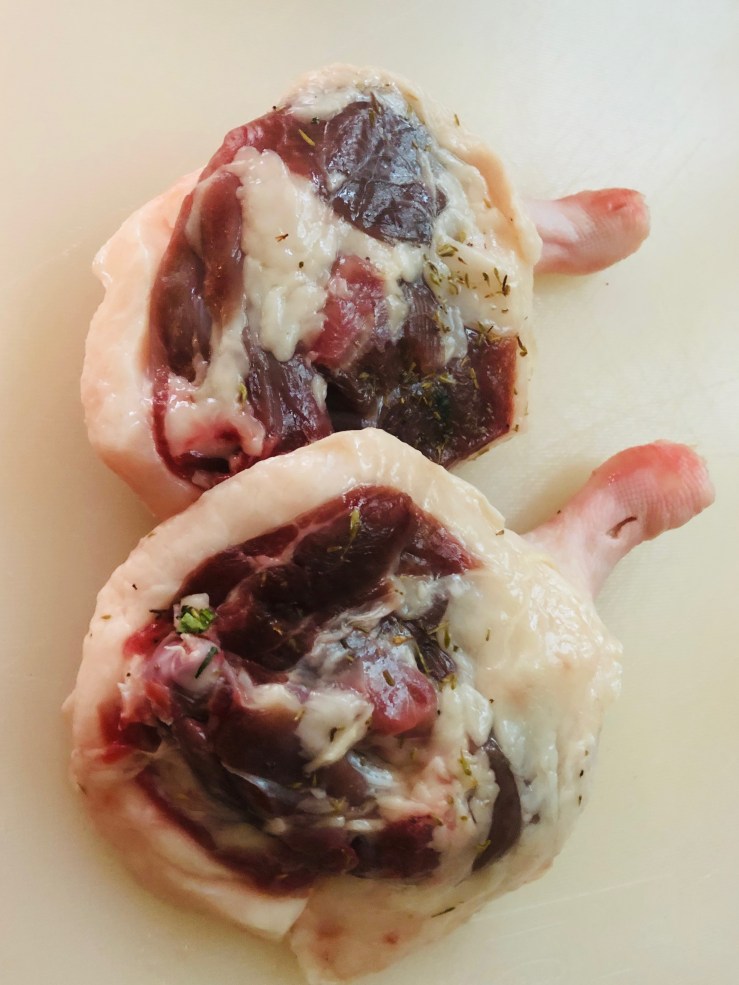
Preparing Duck leg confit. the salted legs are washed and patted dry. This is a mature domestic duck (Pekin) with a good thick fat layer and dark rich meat.

Put in a slow cooker fully covered in duck fat.  Set it on low and leave for 4-8 hours.

IMG_9682
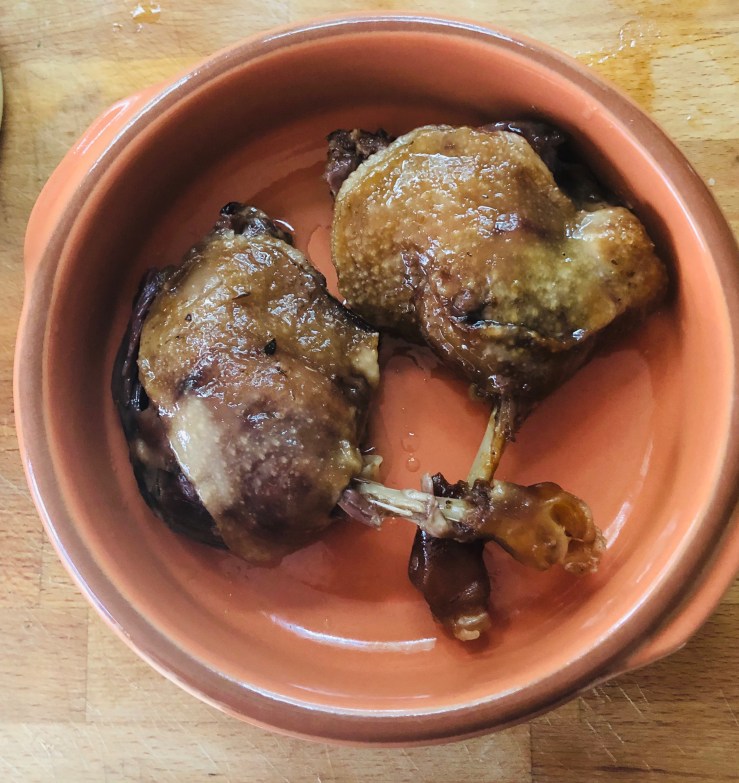
Confit duck straight out of the slow cooker. these have been lifed very carefully as the meat is fall apart. they will be covered in the fat they have cooked in for the last 8 hours and then be covered and stored in the fridge for a week. 

Swich off  and allow to cool. can store under the layer of fat for 1-2 weeks in the fridge. if frozen in the fat will keep well.

(This can be done sous vide – put v cold solid duck  fat and the legs in vac packed bags – cook at 75 degrees C for 12+ hours). *I dont think its any better than in slow cooker.)

Use as you wish but here are a few suggestions:

  • Salad perigordine
  • duck and tomatillo tacos 
  • crisped up and served with duck sarladaise
  • duck cottage pie
  • as a version of chinese crispy duck with the trimmings
  • with garlicky cannellini or flagelot beans
  • cassoulet
  • duck on lentils
  • duck rillettes
  • or more at the fantastic d’Artagnan site

(I will add more links to recipes…)


Duck and Tomatillo Tacos

IMG_9649Duck is not a usual item on a taco menu. It is not mentioned in the excellent Tacopaedia nor is there an abundance of duck recipes in any of my mexican cook books.
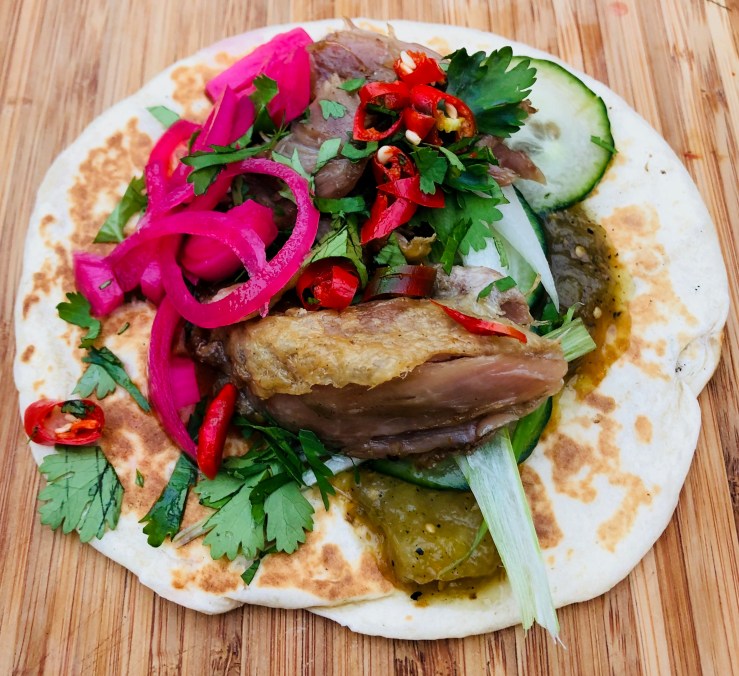
Duck is much more associated with Asian and French cuisine and many wonderful dishes are described. Two such dishes lend themselves perfectly to the world of tacos. The wonderful Peking Duck, shredded soft meat half rolled on a soft pancake with sliced onions and cucumber and a slather of plum sauce is essentially a chinese taco. The slow cooked fat bathed falling off the bone confit de canard is strikingly similar to Carnitas in both texture and technique.

So put these two together and its forms the inspiration for a duck based Taco.

The duck, (or pato) needs to be fatty and meaty. The Muscovy duck is a native breed to central America so could be argued that its the perfect choice but this is so full of flavours and texture that can use duck you can source. This is a domesticated duck recipe and wild duck will not work well here.

Take the duck legs and salt well with a coarse salt. This is ideally done for 24-48 hours before.

Rinse off the salt. Pat dry. Put the legs in a slow cooker or heavy casserole and cover with duck fat or lard. On a very low heat cook for 3-6 hours. depending on your preference aromatics can be added but have a light touch as this method of cooking allows all the flavour containing fat solouble oils to be extracted. Star anise can quickly become overwhelming. Chilli will be enhanced. I find a bayleaf and a pinch of oregano gives a deeper flavoir to the dish.

This is now basically confit de canard and can be cooled and stored in the fridge for 1-2 weeks.

Lift the duck from the fat. easier siad than dome as it will be fall apaprt tender. Easiest is to keep pouring off the fat and get the duck under a grill in a large deep oven tray.

Up to you now. sprinkle with a BBQ rub (as you know I love Good time Andy’s ).

Grill till the skin starts to crisp up and the meat takes on a slight crust.

Now get your tortillas on the hotplate. I have a cast-iron pan just the right size for them. Use a dry frying pan. If you can do them and eat them as they come of the pan perfect but if not wrap in a clean tea towel.

Assemble the taco to your imagination and liking. if you can get a tomatillo chutney or sauce the sweet sour matches the duck perfectly. Better than classic duck a l’orange.

My assemblage is:

Tomatillo salsa, fresh home pickled red onions (see here for link), chopped red chillis, sherdded coriander, chopped scallions, lime juice over the top.

IMG_9647

This is robust food – it will take flavour. Great for a slather of you favorite hot sauce. I personally favour Pips nagatropolis but this is a dish that will take fklavours from Asia to Arizona.


Adventures and Travelogue

“People will travel anywhere for good food – it’s crazy”  Rene Redzepi

If the best chef in the world thinks its crazy it may be so but lets go back. Back to our earliest ancestors. Why did they move?

They moved to find food. The hunter gatherer spirit of our earliest forebears motivated them. Maybe for survival or maybe for variety. The zest for food that is demonstrated by tribal communities is fascinating. We may have lost the contact with the earth, the hunt, the dig, the thorns from foraging but we still have a spirit to hunt out variety and quality.

We are capable of producing nutritious balanced and perfectly survivable drinks and foods that need no thought or effort but we have that deep spirit that craves the equation of:

good food = happy

The following pages encompass the drive to travel and experience different places and people through their food and drink.

Please enjoy and be inspired.

low angle photo of airplane
Photo by Sam Willis on Pexels.com


Sea bream with Fennel

On a slightly too warm evening minimal effort on the kitchen is needed. Grilling outside is fine but after a hard day is more work.

Easy as anything is this dish. Skin on filets of Sea Bream, Sea Bass or other meaty white fish are ideal. I guess any decent firm fleshed midsized fish filet will be good here. In the USA Red snapper, Drum or Redfish would be good.

Really simple.

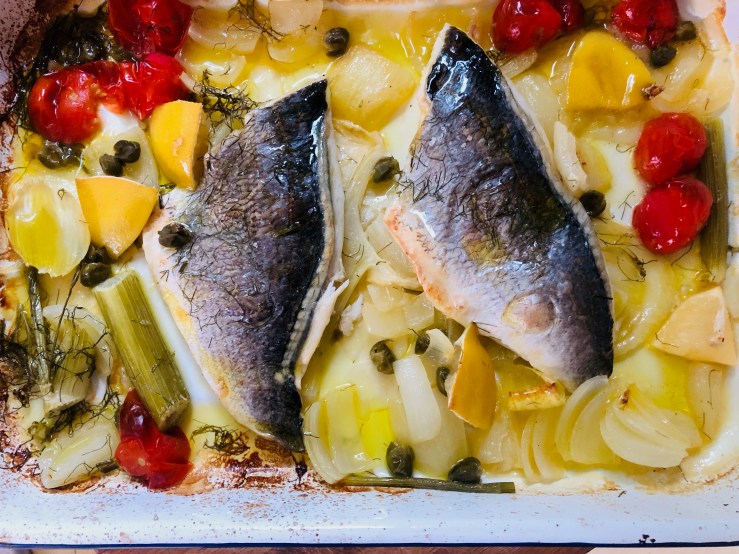
Heavy baking tray. Oven onto about 150 degrees. Slice thinly some fennel bulb. Throw in some cherry or baby plum tomatoes. A sliced onion. some sliced potatoes (could par boil or microwave if you want to be soft). Throw on some lemon quarters and a handful of capers

Toss the lot in olive oil.  Put the fish filets on top skin side up. Scatter with Maldon or a coarse salt. One glass of white wine into the pan. one into a glass and enjoy.

Sea Bream with Fennel

Into the oven uncovered for 30 mins.

The wine will steam the fish and cook the veggies.

Serve with a side salad and good bread to mop up the juices.

(does it need saying that a bottle or 2 of good crisp white wine might work well here…!)

SeaBream with Fennel, capers and tomato

Potted Meat

The origins of potting go way back. Preserving without refrigeration was a challenge.

In cooler climates when the seasons minimised hunting and fishing reliance on stored food was paramount.

Some friuits and vegatables stored well but meat would spoil unless treated. Salting, smoking and air drying were the mainstay but with time it was seen that cooked meat could be stored without spoiling. To do this a technique of keeping the oxygen out was required and before tins and jars this relied on using fat as the seal.

With this a certain element of improvement in flavour and texture was seen and from this the great dishes of pates, terrines, rillettes and confits have derived.

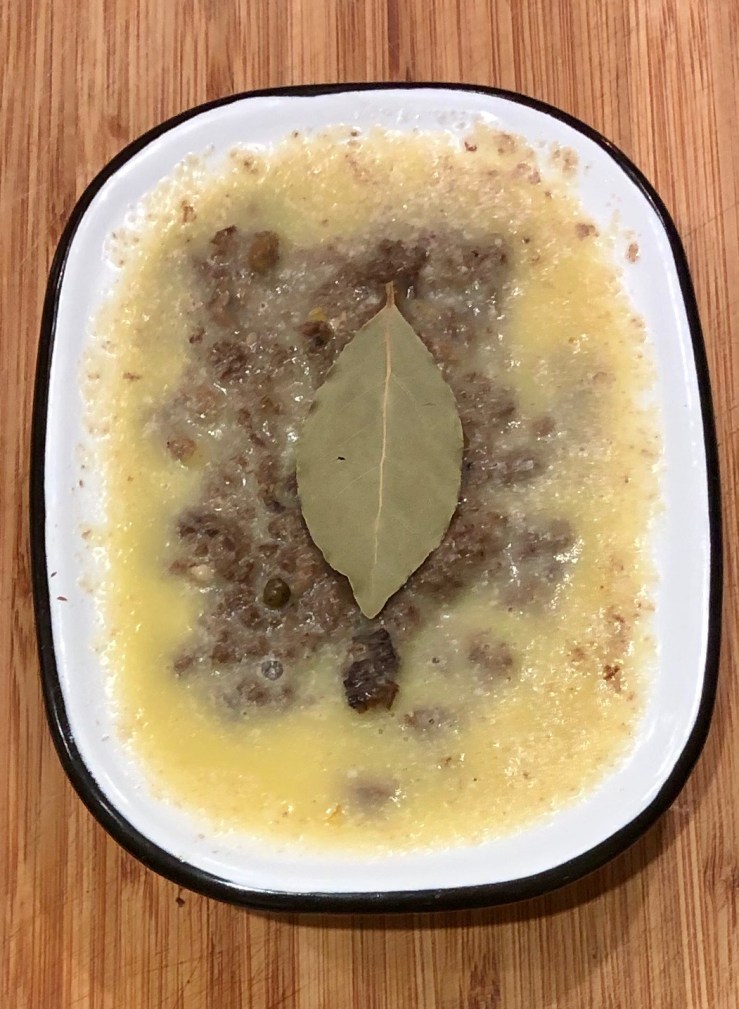
A particular dish of English history is that of potted meat or fish. A shredded protein moistened with its own cooking stock and sealed under butter. Spices traditionally were heavy with spice; mace and cinnamon, pepper and garlic, cloves, ginger and cayenne.

Game is especially suited to these preparations but other meats and fish are also candidates.

The most famous dish that still is on the shelves of supermarkets is the wonderful morcambe bay potted shrimps , a delicacy spread on hot brown toast.

Potted shrimps were really only an industry from the 1920s and the principle of potting goes much further back.

For Potted salmon The Experienced English Housekeeper by Elizabeth Raffald (1786) states:

salmonrecipe2


In the updated “New experienced English Houskeeper” published in 1795, Sarah Martin writes

Salmonrecipe

the use of mace, nutmeg, chyan (Cayenne) and salt must have been impressive.

For meat things go further back.

The formulation of  pate and potted meats appears as similar as the words describing them. There are several explanations of this. Pate is etymologically similar to pasta and may refer to the smooth paste that is familar in modern pate.

Potted foods may derive from the same but in medieval times storage and transport of cooked meats was often in  pastry case as a pie. The pastry was a seal rather than a edible part. A development of the seal using fat rather than pastry occurred and a covering of goose or pork fat was used as still the case in rillettes or confit.


Rillettes: A French savoury meat preparation, used for hors-d’oeuvres and savouries

Charles Herman, Culinary Encyclopaedia 1898

The more readily available butter was also used and spices added to improve and individualise preperations.

Other flavours were added and broths and stocks added to retain moisture.

Sealed under a layer or “garment” of fat these products could be kept for weeks or months.

Here is a link to my recipe for potted woodcock.

IMG_7461

Buck’s Boiled Peanuts

Most of us are aware of the ubiquitous salted peanuts or their extravagant cousins the come in the dry roated variety. Available globally in foil packs with a long shelf life they get opened for pre-dinner drinks, celebrations or just when unexpected gusets drop in.

Then there is the raw peanut in the shell (I grew up calling them monkey nuts), which for unknown reasons has become more likley to be in a bird feeder than a bowl. Perhaps the cracking of the shell, extracting the unflavoured, unsalted nuts are beyond the modern taste.

However my peanut experience reached a new high on a recent roadtrip through Alabama. The humble peanut was transformed for me.

Alabama formerly a great state of cotton now is the peanut champion of the world.

The local way to serve them is boiled. Fresh green peanuts in the shell.

Cooked more like beans with salt and water for 3 hours they take on an almost tea like flavour with tannin and subtle herbal grassy taste and just a tiny hint of sour.

Buck who is renowned for selling P-Nuts from his stand on the side of the Old Seale Highway in Pittsview, Al.

UNADJUSTEDNONRAW_thumb_63cc
Bucks P-Nuts
7dvdlmhftf5nwlxsej3mg_thumb_63c8.jpg
Buck’s P-nuts, Pittsville, AL

Buck does both traditional and cajun flavours and a scoop will cost you $3 or 2 scoops $5.

Are Bucks the best in Alabama? well plenty would say yes and he has the pages of his vistor book stapled to the wall of his little stall. Evidence that visitors have travelled from 52 countries and all 50 states just to taste his peants.

He will get you to try a few, take a few photos and let you in on his philosopical musings scrawled on boards on the wall.

IMG_9685
Buck’s Boiled p-nuts


If your passing grab a bag, split the shells and pop the soft P-nuts into your mouth. They are messy and definately not a snack to eat whilst your driving but even later when they have cooled down they are a fine accompanyment to a cold beer or a glass of wine.

IMG_9684
Boiled peanuts Alabama

If you have’t tried boiled peanuts before you must. If you have tried them, then go see Buck and see why people make the journey.